

Oh Lawd, He Comin’: A Stress-Free Guide to Your Cat’s Weight Loss Journey
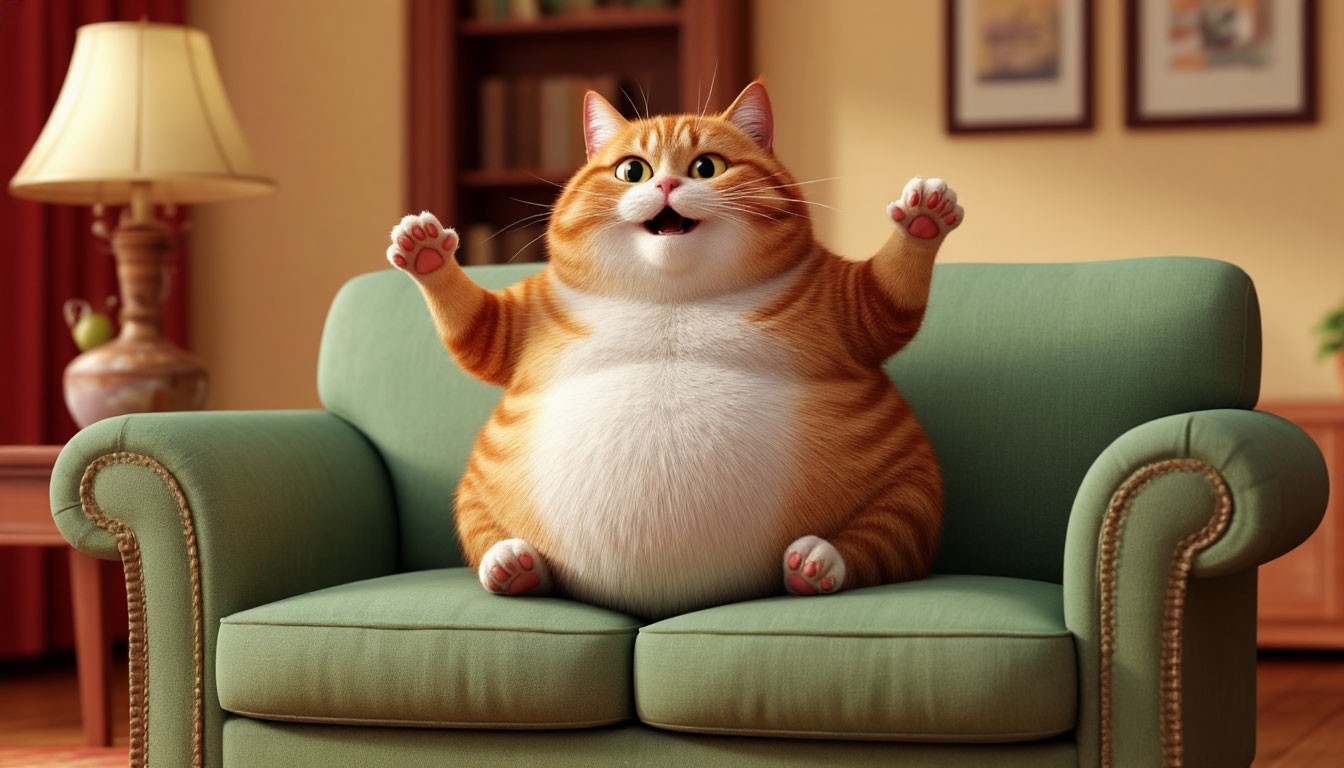 Let’s be real for a second. There is nothing funnier - or more concerning - than watching your cat attempt a jump onto the couch, miss by a mile, and then look at you like you moved the furniture.
If your feline friend is looking less like a sleek panther and more like a furry pumpkin with legs, you’re not alone. According to the Association for Pet Obesity Prevention, an estimated 60% of cats in the U.S. are classified as overweight or obese.
But before you put Garfield on a hamster diet (please don’t), let’s talk about how to handle this. It’s a sensitive topic. You can’t just explain calories in/calories out to a cat - they don’t care, and they will weaponize the 3 a.m. “feed me” scream if you try.
Here is how to help your cat shed the pounds safely, keep the peace in your home, and avoid the side-eye of doom.
Step 1: Don’t Trust Your Eyes, Trust the Vet (Seriously)
First thing’s first: Stop guessing.
I know, I know - your cat looks like a loaf of bread with fur. But “looking chunky” isn’t a medical diagnosis. Before you change their food or cut back on portions, you need to visit your veterinarian.
Why? Because weight gain can sometimes be a symptom of underlying issues like hypothyroidism or fluid retention. Your vet needs to give your cat a physical exam to rule out any medical reasons for the weight gain. Only a doctor can give you a real diagnosis and a safe weight target.
Do not skip this step. Do not rely on “that guy at the pet store” or your neighbor who swears by the kale smoothie diet for her Yorkie. Your vet will assess your cat’s Body Condition Score (BCS) and help you set realistic goals. Plus, they need to make sure your cat is healthy enough for exercise. A fat cat with undiagnosed joint pain isn’t lazy - they’re hurting.
Step 2: The Math Behind the Meow (Calculating Food)
Once the vet gives you the green light, it’s time to do some math. But don’t worry, we’re keeping it simple.
Most cat parents just fill the bowl when it’s empty. That’s the equivalent of leaving your fridge open 24/7 and wondering why your jeans don’t fit. You need to know exactly how much fuel you’re putting in the tank.
1. Find the Calorie Count (kcal/cup or can) Look at the back of your cat food bag. It should list the calories. Usually, it’s something like “350 kcal per cup.” If it doesn’t say, check the manufacturer’s website. If they hide it? Buy better food.
2. Calculate the Target Calories A sedentary, overweight cat needs roughly 20 calories per pound of their ideal body weight to lose weight safely.
- Example: If your cat, Chad, weighs 15 lbs but should weigh 12 lbs…
- Calculation: 12 (ideal weight) x 20 = 240 calories per day.
That’s it. Chad gets 240 calories. Total. Including treats.
3. Measure, Don’t Guess If Chad’s food is 350 kcal/cup, then 240 calories is about ⅔ of a cup. But here is the golden rule: Use a kitchen scale, not a measuring cup. A kitchen scale is more accurate. Measuring cups can be off by 20-30% depending on how densely the kibble settles. Get a cheap food scale, weigh the food, and put it in a puzzle feeder to slow them down.
Step 3: How to Make Your Cat Lose Weight Without Losing Your Sanity
Now for the hard part: convincing the cat to participate in this lifestyle change.
If you suddenly cut food in half, your cat will not understand. They will think you are starving them. They will yowl. They will knock things off the shelf. They will sit on your face while you sleep.
The Strategy:
- Slow and Steady: Reduce their food gradually over two weeks. Mix a little less old food with a little more diet food (or veggies like steamed green beans, which are safe for cats and add bulk) until the transition is complete.
- Rethink the Treats: Treats are the enemy of weight loss. If you must give treats, use a portion of their kibble. Or give them a single freeze-dried chicken bit. Break it in half. Make it last.
- Grazing is Over: Do not leave food out all day. Cats in the wild eat multiple small meals, but they work for them. Your house cat works for naps. Switch to meal feeding. Feed them small portions 3-4 times a day. This increases their metabolism and stops the “bottomless bowl” mentality.
Step 4: Exercise? More Like “Enrichment”
You can’t take a cat for a jog. But you can trick them into moving.
If your cat is obese, don’t expect them to chase a laser pointer for an hour. They will get tired, frustrated, and give up. Start small.
- Move the Food Bowl: Put the bowl upstairs or at the other end of the house. They have to walk to eat.
- Interactive Play: Use a wand toy. Let them “catch” it every few pounces to keep them engaged. Five minutes, twice a day.
- Cat TV: Sometimes, just opening the blinds to let them watch birds is enough mental stimulation to keep them from eating out of boredom.
Keeping It All Together (Because Life is Busy)
Let’s face it: managing a pet’s diet and health is a lot of admin. You have to remember the vet checkups, the worming schedule, the daily feeding amounts, and the play sessions. It’s easy to fall off the wagon, especially when your cat is giving you the “I’m wasting away” eyes.
This is where a little tech support can save the day (and your cat’s waistline).
Tracking your cat’s progress and managing their health routine can be seamless with an app designed for pet parents. That’s where Bobki comes in handy.
Bobki is essentially a mission control center for your pets. While you’re busy calculating Chad’s 240-calorie daily intake, you can log it in the app to track trends over time. The Task Calendar is perfect for scheduling those gradual feeding changes and reminding you when it’s time for the next vet weigh-in (because consistency is key!).
Beyond the diet, Bobki helps you understand your cat’s mood with its Body Language Book - so you can tell the difference between “I’m genuinely hungry” and “I’m manipulative and judging you.” And if Chad starts losing weight but gaining attitude, you can use the built-in Training tips to redirect that energy into positive behaviors rather than destructive scratching.
How to understand which food is more suitable for your cat can be found in this article.
The Bottom Line
Helping your cat lose weight is one of the greatest gifts you can give them. It adds years to their life and life to their years. Just remember: work with your vet, do the math on the food, and make the changes fun, not frightening.
Your cat might be grumpy about it for a few weeks, but eventually, they’ll have the energy to jump back on that couch - and this time, they’ll make it.